People's Emergency Briefing
We are feeling overwhelmed, bombarded with bad news each day – global economic and political instability from the Trump circus and the Rule of the Rich in Davos, the rising cost of living, job insecurity, severe weather events. It is a polycrisis – a coming together of related issues from different directions. This not only heightens anxiety but also makes it more difficult to keep going. The lack of predictability creates disturbing doubt about the future, which blocks our ability to imagine ourselves in it. We find it difficult to cope, and the likely result is that we switch off and stop trying to think deeply about any of this stuff.
2026-01-31
But we cannot afford to just ignore it because the issues keep multiplying and pressing for attention. We owe it to ourselves, to our futures and those of our children and grand-children to confront the fundamental problems. Who else is there to do this? Our political representatives? For the most part they are ducking and diving to avoid taking action.
Take the issue with the largest EMERGENCY label: Climate Change. Yes, I know that the popular press has recently stated that the cost of Net Zero is seven trillion pounds and therefore we cannot afford it, but this is misinformation (listen to BBC Radio4 More or Less, January 21 2026). The true cost of the transition is currently estimated to be about 2% of Gross Domestic Product. And the cost of taking action is much much less than the cost of inaction.
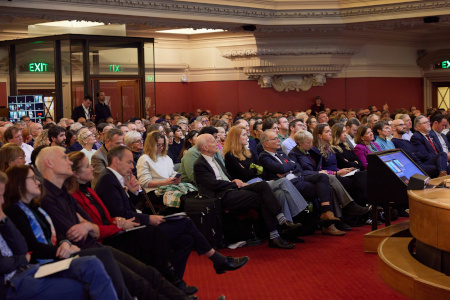
Did you know that we are in an Emergency situation? There should be an ongoing Public Information warning published across all media like for AIDS or COVID. This is also a Health Emergency. A few weeks ago in November 2025 a small group of our best climate scientists gave a National Emergency Briefing in London attended by 150 MPs/peers. It was recorded and will be turned into a film for general release some time in April. There is now a Trailer. You can view each succinct presentation on YouTube nebriefing There was a wide range of interacting topics as befits such a complex subject, so you could choose to sample from presentations on nature, climate, weather extremes, tipping points, food security, health, national security, economics and energy transition. Each one is quite short.
This can be a difficult watch though especially if you have not engaged with these issues before. But there is still hope. We have a chance to choose which future we want. And depending on which version we choose, that transforms our actions today. We can make choices and collectively work towards that future. To discuss your thoughts about this emergency join the next Bromsgrove Climate Cafe discussion - contact me for details.